HERITAGE


Bíonn toradh ar obair Gael Linn
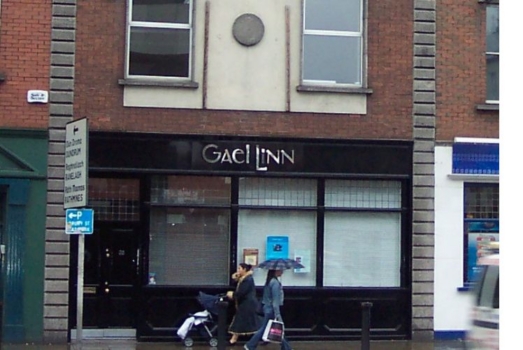
The founders of Gael Linn realised early on that a culture of complaint was unproductive. They preferred to take the initiative themselves, step by step. “Bíonn toradh ar obair Gael Linn” (“Gael Linn’s work yields results”) was their motto. Since 1953, Gael Linn has amassed a rich cultural heritage of national and international significance.
History of Gael Linn
Summary of highlights in the organisation's story
- 1953
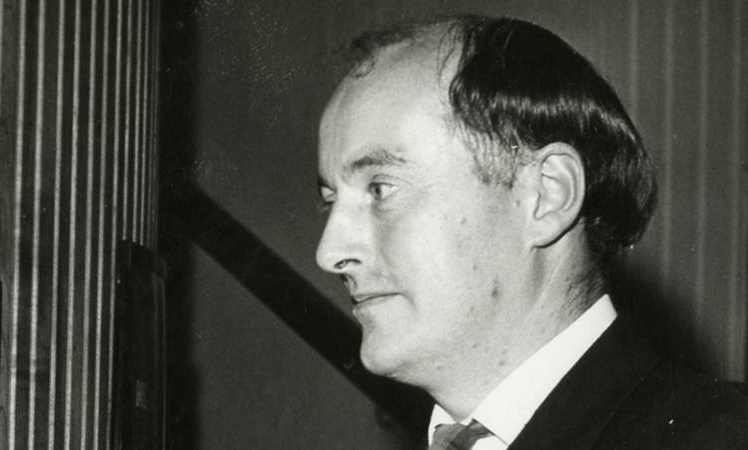
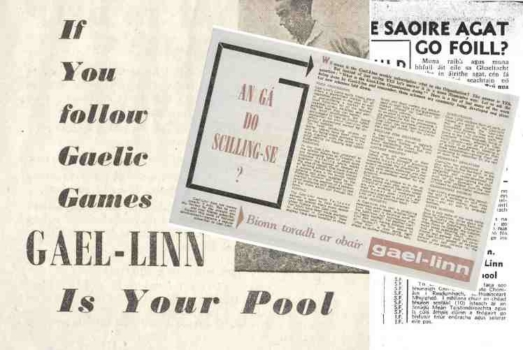
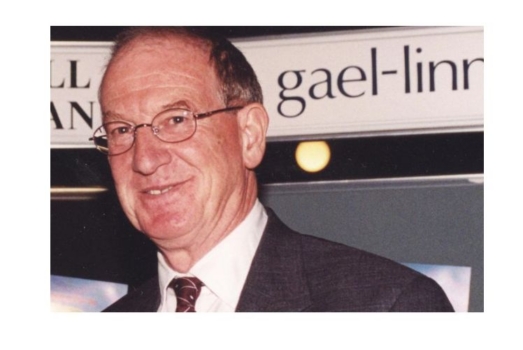
- A group of graduates from the organisation An Comhchaidreamh, led by Dónall Ó Móráin and Riobárd Mac Góráin, founded Gael-Linn in 1953. Riobard was appointed the first ever full-time manager. Both men spent their whole working careers working for the organisation. (see pic.) >> The founders had definite ideas about what needed to be done to put the Irish language on a secure footing and, moreover, they had strong views on how the old obstacle - lack of funds - could be overcome. Football Pools were founded, based on Gaelic games. >> A sponsored weekly radio programme was produced and broadcast on Raidió Éireann. This programme publicised the results of the pools each week as well as news of Irish Language events. >> A Deed of Trust was signed between An Comhchaidreamh and a group of six people, as Caomhnóirí, or Trustees, who effectively were the first Board of Gael-Linn.
- 1954
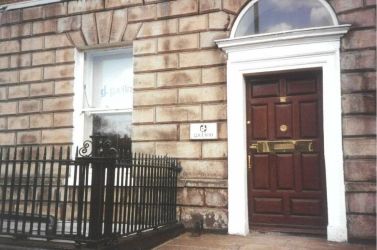
- At the July meeting of the An Comhchaidreamh, Dónall Ó Móráin claimed that the organisation had timiri in every part of the country. However, the pools made little profit in the first two years, and Gael-Linn could only afford to award small grants. Money was given for Gaeltacht scholarships to Ógra Éireann and An Garda Síochána, and to certain branches of Conradh na Gaeilge. By the end of 1954, however, Gael-Linn had £3,000 in the bank, and this was considered sufficient to undertake schemes of their own. >> In June, the organisation issued an announcement stating 'We Will Have an Irish Language Theatre'. The funds were not yet available, but the Directors hoped to be able to undertake the theatre project in due course. >> Staff moved into new offices in 44 Kildare St. Dublin where they remained until 1959.
- 1955
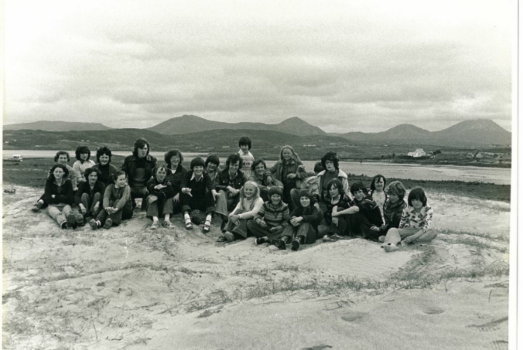
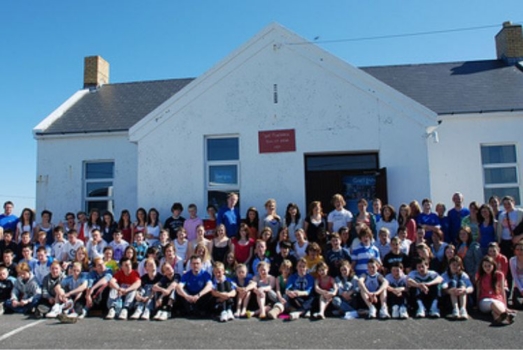
- A three-month Gaeltacht scholarship scheme for primary school children was established, with 32 children spending the Easter – Summer term in various Gaeltacht areas. (see pic.) >> A grant was given to the founders of Scoil Lorcáin, Monkstown, Dublin, an all-Irish primary school. >> An Irish language theatre was established in The Damer Hall, on St. Stephen’s Green, Dublin. This was a semi-professional/amateur based theatre. Aisteoirí Chéitinn launched the first drama season on 14 November with three short plays. A Drama Club was also launched and members who paid an annual subscription of ten shillings had free entry to all productions. >> A discount scheme was launched under which Gael-Linn Pools members could obtain a discount on Irish-made goods in shops that were listed on the results sheets that the timirí gave to the members every week.
- 1956
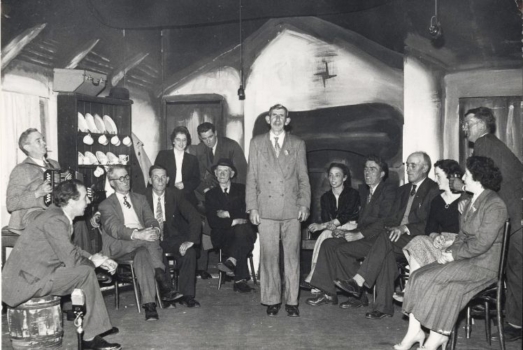
- Oícheanta Seanchais, entertainment sessions of traditional storytelling and sean-nós singing established in Dublin as part of An Tóstal festival. These sessions were held each year until 1960. (see pic.) >> Gael-Linn opened an office on Grand Parade in Cork city. >> Gael-Linn established a two-month scholarship scheme for secondary school children from Northern Ireland to spend a period in the Donegal Gaeltacht. At the time, Gael-Linn had not yet set up a summer college of its own, and the majority of the scholarship winners attended Coláiste Bhríde in Rann na Feirste. >> On 7 April, at Aisteoirí Ghaoth Dobhair's production of 'Oíche Fhéil’ Mhichíl' at the Damer, the final production of the season, Dónall Ó Móráin thanked everyone who helped the Drama Club register five hundred members in its first year.
- 1957
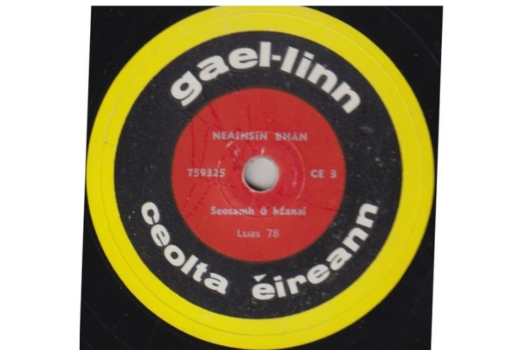
- Gael-Linn records are among the greatest treasures in the organisation's crown. In 1957, Gael-Linn released its first 78 rpm records. Each record had a sean-nós song on one side and traditional instrumental music on the other. They also had beautifully designed covers, complete with the lyrics of the songs which was a new innovation at the time. (see pic.) >> A series of Irish language drama festivals was started, which led to the establishment of An Chomhairle Náisiúnta Drámaíochta, an organisation for the promotion of Irish language drama. >> It was decided to establish a fish and vegetable processing plant in Camus, in the Galway Gaeltacht. Five boats suitable for in-shore fishing were also procured and given to local Carna fishermen on a purchase lease basis.
- 1958
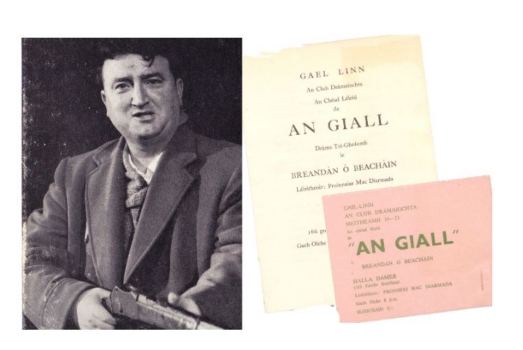
- A 135 acre estate at Teelin in south Donegal, which included a sheep/pig farm and fishing rights to local rivers, lakes and Teelin Bay, was purchased, primarily to protect the livelihood of the local salmon fishermen. The farm and the fishing rights were eventually sold separately, with the fishing rights being sold to Údarás na Gaeltachta for the benefit of a local co-operative. >> An Irish language teaching institute, Foras na Gaeilge, was established to organise Irish courses for adults and young people. >> Brendan Behan's famous play 'An Giall' (The Hostage) was staged for the first time ever in The Damer Hall. (see pic.) >> Gael-Linn aquired a three-storey block of offices at the top of Grafton St. Dublin for use as their new headquarters. >> The first ever LP was released on the Gael-Linn label, featuring Tomás Ó Súilleabháin and the Raidió Éireann light orchestra.
- 1959
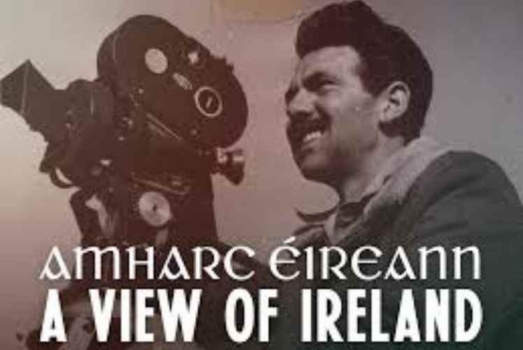
- Weekly newsreels of events in Ireland, with an Irish language commentary, Amharc Éireann, were distributed to the Rank cinemas throughout the country. These continued for five years, with more than 260 editions screened. (see pic.) >> Following submissions to the Television Commission, a body set up to examine and make recommendations regarding the establishment of the first television station in the country, Gael-Linn applied for the licence to run the station but the Government decided to establish a semi-state body to run the new service, Teilifís Éireann. >> Cabaret Gael Linn, a well-presented entertainment programme was established and performed in hotels and tourist venues throughout the country. >> A post-primary school, Coláiste Chomáin, was established in Ros Dumhach, in the Mayo Gaeltacht.
- 1960
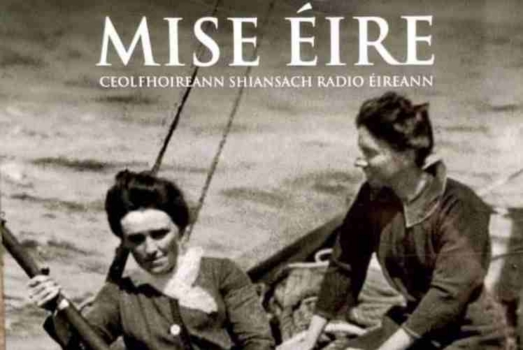
- Mise Éire, the first ever full-length feature film in Irish and the first ever feature film based on actual newsreel footage was released, with the now famous music score by Sean Ó Riada. The film covered the struggle for Irish independence from the early 1890's to 1917. (see pic.) >> A decision was made to invest in a seaweed processing factory, Tora Toinne Teoranta, in An Cheathrú Rua, in the Galway Gaeltacht. >> A team from Loreto Convent, Letterkenny were the first team to win the All-Ireland Final of the new schools debating competition which was initiated for the 1959/1960 schoolyear. >> Gael-linn opened an office in Lr. English St. Armagh. >> Aisteoirí an Damer staged the musical 'Spailpín a Rún', written by Seán Ó Riada, as part of the Dublin Theatre Festival.
- 1961
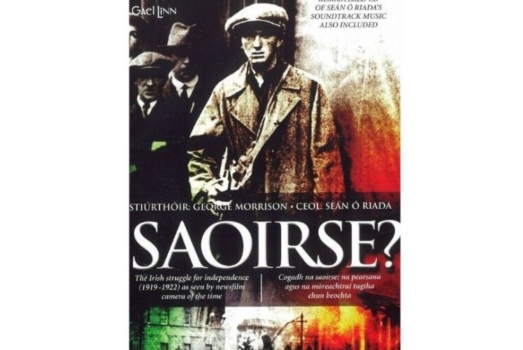
- A sequel to Mise Éire, another full-length feature film, Saoirse?, covering the period from 1917 to 1922 was released. (see pic.) >> A bee-keeping scheme was established in the West Cork Gaeltacht of Cúil Aodha and in the West Kerry Gaeltacht of Corca Dhuibhne. >> An album by piper Séamus Ennis was released and an instructional record was released to accompany the book 'Teach Yourself Irish'. >> A secondhand trawler named 'An Ros Nuala' was purchased to operate under the management of Gael-Linn (Carna) Ltd. >> The Sunday Review published a cartoon in June showing a man berating his pub cronies with the caption 'If Gael-Linn can't put a man on the moon, then nobody can!'
- 1962
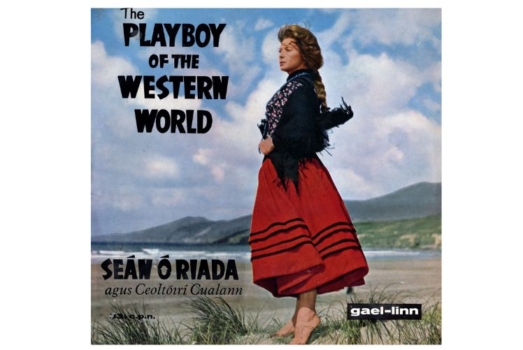
- Oyster beds in Cill Chiaráin were purchased to support the fish processing in nearby Carna. >> Properties in Baile an Fheirtéaraigh and Dún Chaoin, in the West Kerry Gaeltacht of Corca Dhuibhne, were purchased for the development of Gaeltacht holidays. >> Gael-Linn undertook the running of a co-op shop in An Rinn, the Waterford Gaeltacht. >> The organisation was incorporated as Gael-Linn Teoranta, a company limited by guarantee without share capital. >> Among the records released on the Gael-LInn lebel were two featuring Seán Ó Riada and Ceoltóirí Chualann, 'Reachaireacht an Riadaigh' and 'The Playboy of the Western World'. (see pic.)
- 1963
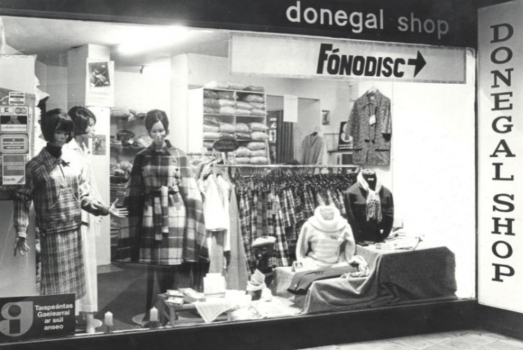
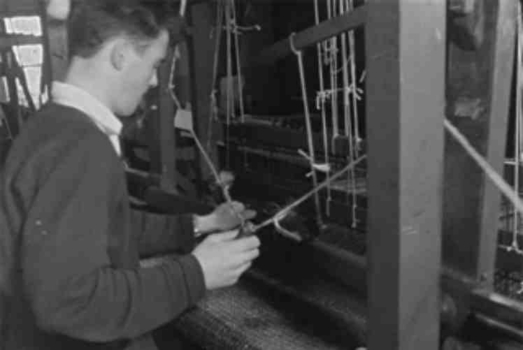
- A company producing traditional hand knitted garments, Inisfree Handknits Ltd., together with a retail shop in Creation Arcade/Grafton Street, Dublin, The Donegal Shop, were purchased. (see pic.) >> A short instructional film on Gaelic Football skills, Peil, was released. >> As a new fundraising venture Bingo was started in a number of venues in Dublin and in other centres throughout the country. The first ever session of Gael-Linn Bingo was organised in Cork city. >> A youth club for former recipients of Gael-Linn Gaeltacht scholarships was established. >> Dónall Ó Móráin was appointed to the role of Ceannasaí of Gael-Linn and Riobard Mac Góráin was appointed Ceannasaí Cúnta.
- 1964
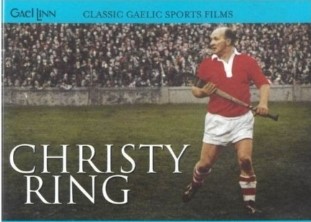
- A majority shareholding was taken in a furniture manufacturing enterprise, John Hogg & Co. Ltd. trading as Crannac, in Navan, Co. Meath. >> A short instructional film on hurling skills, 'Christy Ring' was released. (see pic.). >> Gael-Linn engaged with the pop music industry in the early 1960s, releasing a series of singles in Irish featuring well-known singers from that time, Ray Donnelly, Seán Fagan, Sonny Knowles, Johnny Christopher, and Joe Lynch. The songs included on the records featured titles such as ‘Palabra d’Amour’, ‘Neillí Mhicí Óig’, ‘An bhfuil an fonn sin ort?’, ‘Bí Liom’, ‘Olagón’, and ‘Fill’. Although sales were not particularly high, the initiative had demonstrated for the first time that any musical genre could be performed and presented in Irish.
- 1965
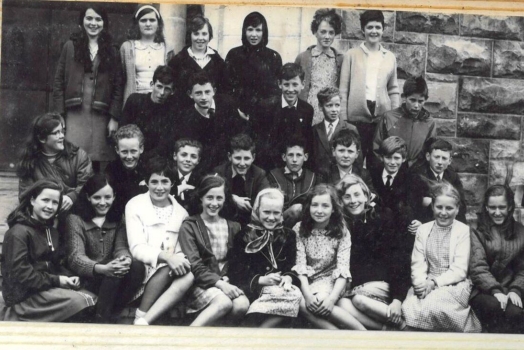
- Coláiste Mhac Dara, a summer college for children who had previously availed of a Gael-Linn three-month Gaeltacht scholarship was established in An Cheathrú Rua in the Galway Gaeltacht. (see pic.) >> A short film on social development in Ireland, Rhapsody of a River, commissioned by the then Department for External Affairs, was screened at the Cork Film Festival. >> An LP of Diarmuid 'ac Choitir's stories was released, along with new extended-play records by Nioclás Tóibín and Seán 'ac Dhonncha. The Record Department set itself the target of selling £2,000 worth of stock during the Christmas market, compared to £1,000 the previous year!
- 1966
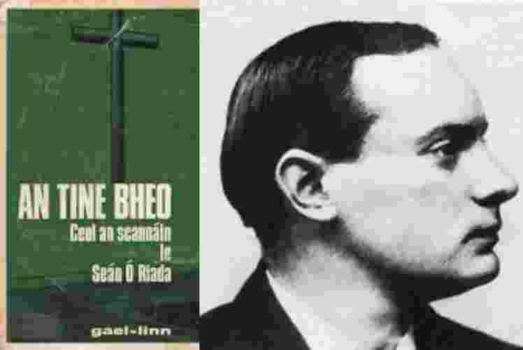
- A special commemorative film on 1916, An Tine Bheo, commissioned by the 1916 Jubilee Committee, was released and shown in cinemas throughout Ireland. (see pic.). The play 'Macalla' by Diarmaid Ó Súilleabháin was staged at the Damer, and a record by Seán Mac Réamoinn titled '1916: Mar a Cumadh an Aisling' was released, also as part of the 1916 Jubilee commemorations. >> A special marketing company, Irlandia, was established to market Crannac furniture and other Irish manufactured products in the U.K. >> A metalworking enterprise, Miotalra, was established in Carna, in partnership with a Dublin-based company, which subsequently withdrew from the business.
- 1967
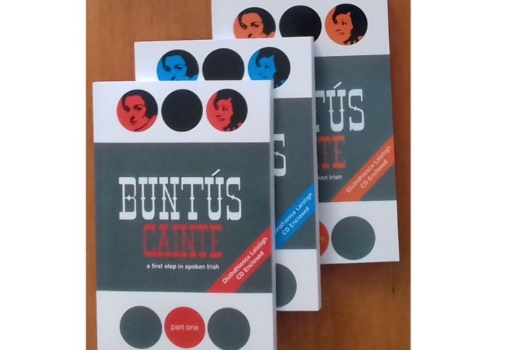
- A short film on the traditional music festival, Fleá Ceoil, was released and won an award at the Berlin Film Festival . >> A Friendly Society, Cara-Chumann Gael-Linn, was established as an investment vehicle. >> A majority shareholding was purchased in Glens of Antrim Tweed Co. Ltd. in Cushendall, Co. Antrim. >> In an effort to support the language the Department of Education produced a booklet to assist viewers of a new television series called ‘Buntús Cainte’ while Gael Linn produced a record and audio tapes to complement the series. 'Buntús Cainte' was aimed at beginners and adults with school going children. >> Two records, ‘Ceol na nUasal’ and ‘Ding Dong’, both featuring Seán Ó Riada, Seán Ó Sé and Ceoltóirí Chualann, were released.
- 1968
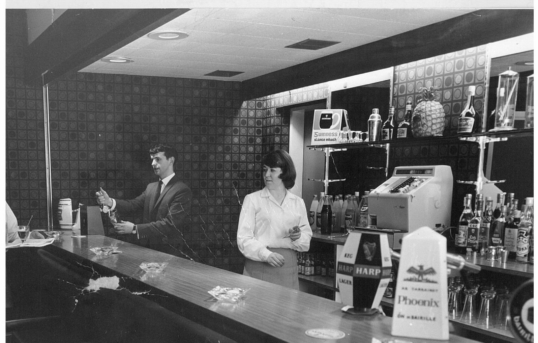
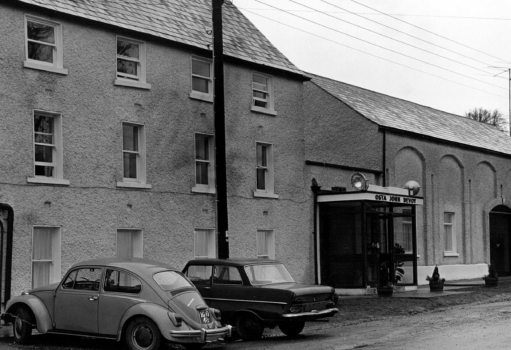
- A licensed bar and restaurant, Ósta John Devoy, in Johnstown, Co. Kildare, was purchased and refurbished. (see pic.) >> At the request of the organisation, Clann na hÉireann, Gael-Linn took over the running of a Hostel, Brú na Mí, in the Co. Meath Gaeltacht of Baile Ghib. Summer courses were held there for two years. >> Gael-Linn was instrumental in setting up a joint venture with Gaeltarra Eireann and three other parties in the hotel industry, Gaeltearmann Teoranta, to establish a chain of quality hotels in Gaeltacht areas, starting with Cathair Ui Dhónaill, in Co. Kerry. >> A short, amusing film on equine sports in Ireland, Capallology, was released and won the 'Monaco' award at the Brussels Film Festival. >> The record 'Trup Trup a Chapallín' with Cantairí Óga Átha Cliath was released.
- 1969
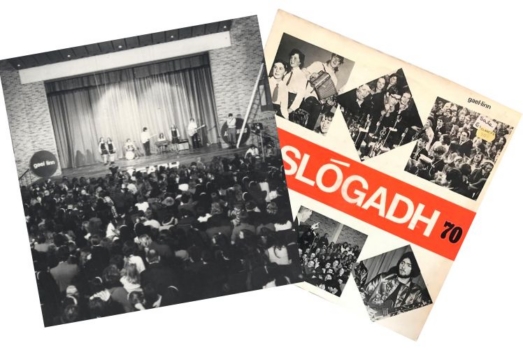
- The youth arts festival, Slógadh, was established involving local qualifying events and culminating in a national final. Competitions included drama, music, singing, and storytelling. >> The Co-Op shop in An Rinn was closed and efforts were made to help the local community to form a local development committee to run it. >> In March 1969, in collaboration with S. Ó Riada and Ceoltóirí Chualann, Gael-Linn staged a concert at the Gaiety Theatre in memory of the Ulster poet Peadar Ó Doirnín. The recording of the concert, released on an album in 1971, is considered a classic by music enthusiasts, and the event itself is regarded as a milestone in the modern history of traditional music. (see pic.) >> The properties owned by Gael-Linn in Baile an Fheirtéaraigh and Dún Chaoin were sold to a local businessman.
- 1970
- The first ever Slógadh Náisiúnta was held in St. Patrick's College, Drumcondra, Dublin, and Gael-Linn later released an album of some the leading musicians and singers who had taken part. Among the winners that first year were a group called Clannad from Gaoth Dobhair in the Donegal Gaeltacht! >> On 28 June, Gael-Linn, S. Ó Riada, and Ceoltóirí Chualann held a celebratory concert in honour of the composer Turlough O'Carolan at Cork City Hall. Although it did not enjoy the same level of success as the concert held at the Gaiety the previous year, it was a special occasion, and valuable material was recorded on the night that was subsequently released on the LP 'Ó Riada'.
- 1971
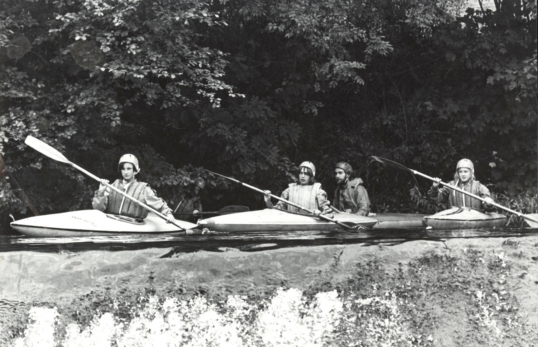
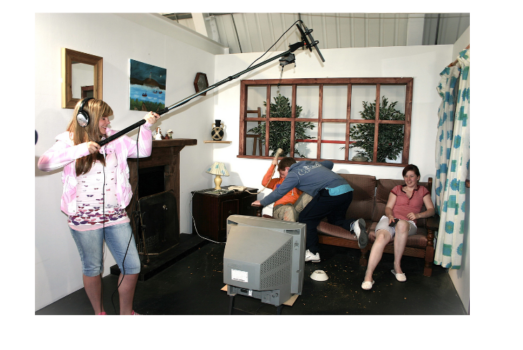
- A short film on life in Ireland, Pobal, was released. >> Eachtra, a summer adventure course for Irish speaking teenagers was established in An Cheathrú Rua, Conamara. Activities included swimming, life-saving, orienteering, kayaking and boating. (see pic.) >> Gael-Linn's shares in Crannac were sold. >> The renowned album 'Ó Riada sa Gaiety' with Seán Ó Riada, Seán Ó Sé and Ceoltóirí Chualann was released, together with a recording of Seosamh Ó hÉanaí, the well known sean-nós singer. >> Seán Ó Riada passed away unexpectedly on 3 October 1970. He was only 40 years of age.
- 1972
- Ósta John Devoy, the licensed bar and restaurant, in Johnstown, Co. Kildare, was sold. (see pic.) >> An arrangement was made with The Department of Education and County Mayo Vocational Education Committee whereby the VEC would take responsibility for the operation and funding of Coláiste Chomáin as a vocational school, with a management committee representing The Department, The VEC and Gael-Linn. >> A new partnership arrangement was made with Gaeltarra Éireann and Portarlington Engineering Products Ltd. with regard to the metalworking business, Miotalra, in Carna. >> Records released included ‘Máire Ní Scolaí’, ‘Skara Brae’, ‘Ceolta Uladh’ (Gerry Hicks), and ‘Tony McMahon’.
- 1973
- Newly released short film, 'Páistí ag Obair', was invited to participate in the London Film Festival and later received an Oscar nomination. 'Mótar mo Chroí', another short film, was also released. >> The summer college Col.Mhac Dara was relocated to Machaire Rabhartaigh in the Donegal Gaeltacht. (see pic.) >> 'Eachtra', the adventure course for teenagers, was also moved to Gort a’ Choirce in Donegal. >> 'The Donegal Shop' in Grafton Street, Dublin was refurbished, and a new music shop, 'Fónódisc', was opened at the same location. >> Records released in 1973 were 'Ceol Potter' with the RTÉ Light Orchestra, 'An Bóthar Cam' with Ceoltóirí Laighean, 'Rann na Feirste' featuring local singers including Aodh Ó Duibheannaigh and Neilí Ní Dhomhnaill, and 'An Ciarraíoch Mallaithe' with Máire and Séamus Ó Beaglaoich.
- 1974
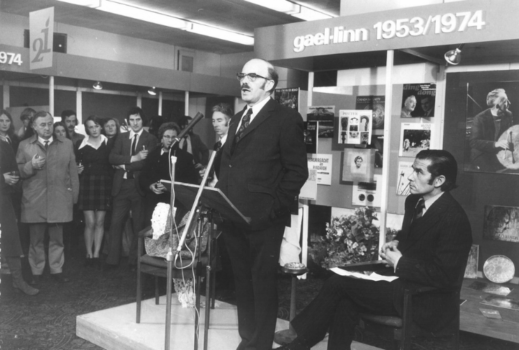
- ‘Poc ar Buile’, an amusing film on golf was released, with commentary by Niall Tóibín. >> In addition to the ‘Eachtra’ adventure course in Donegal, a second course was organised in Corca Dhuibhne. >> The album ’Clannad 2’ was released, as was the single 'An Damhán Alla' with the group Na Cloigne Folmha. >> Gael-Linn celebrated its 21st anniversary with an event in Ireland House, Dublin where the achievements of the organisation were publicised. (see pic.) >> AIB came on board as sponsor of the Gael-Linn schools debating competition, which continued until 1998. >> To enable students taking part in Gael-Linn activities to meet more regulary and to practise their Irish a new scheme was created to organise youth clubs throughout the country.
- 1975
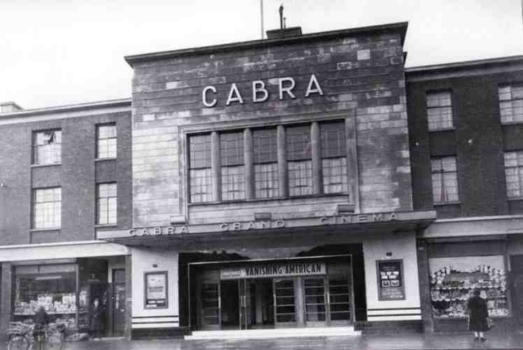
- As a result of a joint venture with Linguaphone a new home-learning Irish language course was produced and launched. >> A summer college was opened in Baile Bhuirne in west Cork. It was housed in Coláiste Íosagáin, rented from the De la Salle Brothers, but in 1986 it moved to the local secondary school, Coláiste Ghobnatan.>> Four former cinemas were purchased in Dublin - The Cabra Grand, The Whitehall Grand, The Deluxe and The Strand. Three of these cinemas had been rented by Gael-Linn as bingo venues for a long number of years up to this point. (see pic.) >> The album 'Tríona' with Tríona Ní Dhomhnaill was released >> The National University of Ireland awarded an honorary doctorate to Dónall Ó Móráin.
- 1976
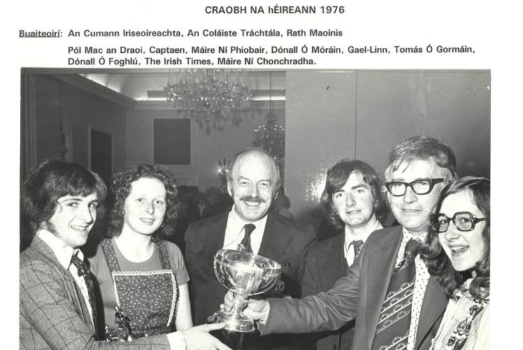
- An Irish language debating competition for third level students was established, with sponsorship from The Irish Times. The first winners were a team from The College of Commerce, Rathmines. (see pic.) >> Among the musicians and singers whose records were released on the Gael-Linn label in 1976 were Micheál Ó Súilleabháin, Caitlín Maude, Aodh Ó Duibheannaigh, Seán Bán Mac Grianna, and Seosamh Ó hÉanaí. An album featuring the best of Slógadh '76 called 'Bualadh Bos' and an album by Ceoltóirí Laighean called 'The Star of Munster' were also released.
- 1977
- Numbers 26 &27 Merrion Square were purchased as a new Headquarters for Gael-Linn. (see pic.) >> Following three years of research, carried out in association with UCG, it was decided to commence development of the oyster beds in Bá Chill Chiaráin near Ros Muc in Conamara, which were originally purchased in 1962. >> The Deluxe Cinema was sold. >> Among the musicians and singers whose records were released on the Gael-Linn label in 1977 were Mairéad Ní Dhomhnaill, Jackie Daly and Séamus Creagh, Mick Mulcahy, Pádraig Ó Carra, Paddy Glackin, Dermot O' Brien, Micheál Ó Súilleabháin and Nóirín Ní Riain, and Clannad with the album 'Dúlamán'.
- 1978
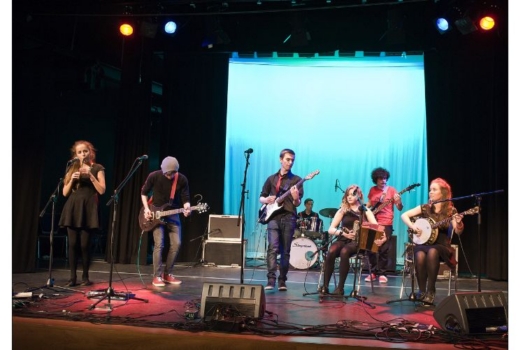
- Towards the end of the year the original football pools were discontinued and a new structure, Cairde Gael-Linn, was established as a basis for a monthly members' lottery. (see pic.) >> Among the musicians and singers whose records were released on the Gael-Linn label in 1978 were Nioclás Tóibín, Seán de hÓra, P.J. Hernon, Nóirín Ní Riain, together with an album featuring the best of Slógadh '78 and an album put together by Ciarán Mac Mathúna called' Mo Cheol Thú'. >> The Slógadh Náisiúnta was held in Wexford town and lasted from Monday till Sunday. As part of the festival Clannad played a concert one of the nights. Some of the best Slógadh musicians also took part in a Summer Slógadh event in the 'Hollow' in the Phoenix Park, Dublin.
- 1979
- The textile company, Glens of Antrim Tweed Co. Ltd., in Cushendall, Co. Antrim, ceased trading. (see pic.) >> The Gael-Linn music shop, Fónodisc, was transferred to new premises in Duke Street in Dublin. Among the records released in 1979 were 'Aifreann 2' (Seán Ó Riada), 'Donncha Ó Briain', 'John Doherty', 'Ceol is Cibeal Chúil Aodha', and 'An Fhidil 1'. A single record featuring well known Belfast singer Albert Fry was also released on which there were two songs 'Mheall sí lena glórtha mé' and 'Síos an Sliabh'. The music from the three films, Mise Éire, Saoirse?, and An Tine Bheo was released in CD format.
- 1980
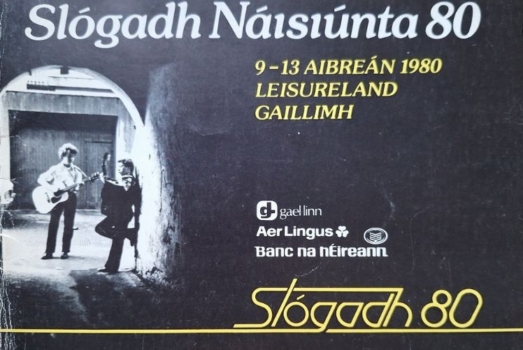
- Following the liquidation of Irish Record Factors, Gael-Linn decided to set up a distribution agency in association with Mulligan Records. >> An Irish language secretarial college, An Coláiste Ard-Runaíochta, was established with the aim of providing a supply of skilled secretaries with a capability for working through the Irish language. >>The Donegal Shop, the retail shop in Creation Arcade, Grafton Street, Dublin was closed and the leasehold on the premises sold. >> Following the decision by the RTE Authority to end sponsored programmes the weekly Gael-Linn radio programme was broadcast for the last time on the 29th of December. >> Slógadh had progressed into a huge festival in its ten years and the Slógadh Náisiúnta was held in Galway in 1980. (see pic.)
- 1981
- The music shop Fónodisc was closed and the leasehold on the premises in Duke Street, Dublin was sold. (see pic.) >> The support organisation, Cairde Gael-Linn, was incorporated. >> Gael-Linn organised a seminar in Dublin on the position of the lesser-used languages of Europe, particularly in the context of a recent report to the European Parliament. >> Among the records released on the Gael-Linn label in 1981 were ‘Rince Gréagach’ (Philip King and Peter Browne), ‘Farewell but Whenever’ ( Treasa O’ Driscoll), ‘Tommy Peoples’, and ‘Cry of the Mountain’ (Micheál Ó Súilleabháin).
- 1982
- A policy document on education, The Future Of the Irish Language in The Irish Education System, was published. >> Over a number of years the organisation was very active in promoting the cause of the lesser-used languages of Europe and Gael-Linn staff were instrumental in the establishment of the European Bureau for Lesser Used Languages. (see pic.) >> A policy document on local radio, 'The Future Of Irish Local Radio', was published. >> Mulligan Records withdrew from the record distribution arrangement with Gael-Linn. Gael- Linn continued distributing their own label and other labels.
- 1983
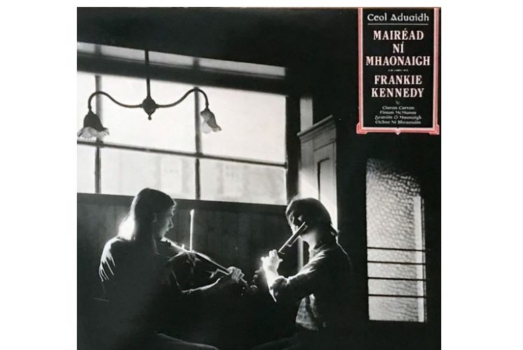
- The Gael-Linn record label released Sail Óg Rua by legendary singer Dolores Keane, together with John Faulkner. They also released Ceol Aduaidh by Mairéad Ní Mhaonaigh and Frankie Kennedy, which became a seminal album in Irish traditional music. Other records released that year included ‘Tráth’ (Barry Ronan), ‘Port an Phíobaire’ (Johnny Keenan), Croch Suas É’ (Frankie Gavin), and ‘Éistígí Seal’ (Matt Cranitch. (see pic.) >> In collaboration with the Wexford Vocational Education Committee, an adventure course (Eachtra) was held at the Shielbaggan Outdoor Education Centre in that county during the summer.
- 1984
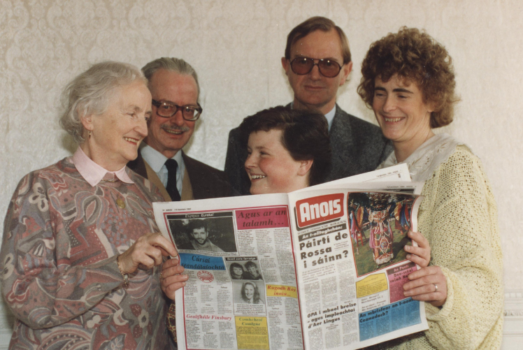
- A new weekly newspaper, Anois, was launched by Gael-Linn. This was the first Irish language newspaper in tabloid form and the first to use full-colour. Newspread Ltd, a major wholesale distributor of magazines and newspapers distributed the new title. A separate company, Anois Teo., was set up and incorporated. (see pic.) >> The pig farm in Teileann, Co. Donegal was sold. >> The last Eachtra course was held on Achill Island. The cost of such courses were too high for the market to bear in the harsh economic climate that prevailed at the time. >> The Irish language secretarial college, An Coláiste Ard-Runaíochta, also closed following a change of policy by AnCo, the state organisation for job skills training.
- 1985
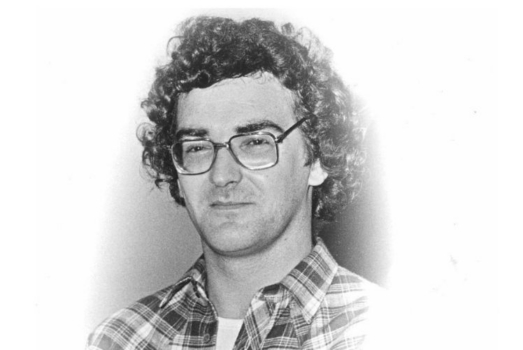
- It was a very sad year for the Gael-Linn staff, as Pól Mac Giolla, who worked for Slógadh, died tragically in a road accident while still in his thirties. (see pic.) >> Among the records released by Gael-Linn in 1985 were 'I gCnoc na gCraí', (Noel Hill and Tony McMahon), 'Jimmy mo mhíle stór', (Jimmy Crowley) and 'Deora an Deoraí' (F. Gavin, P. Brock, C. Lennon). >> The Slógadh Náisiúnta was held in Mullingar for the first time. >> Bibi Baskin left her job as editor of the newspaper ‘Anois’ to take up a role in RTÉ and Tomás Mac Síomóin was appointed in her place. The number of pages in the newspaper was reduced from from 20 to 16 due to financial difficulties. Gael-Linn also granted a loan to ‘Anois Teoranta’ and reduced the rent on their offices in order to help the newspaper to survive.
- 1986
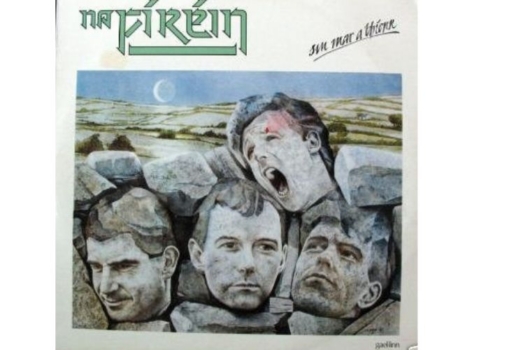
- Among the records released by Gael-Linn in 1986 were 'Omós do Joe Cooley', 'Mary O' Hara sa Ghaileirí Náisiúnta', 'Bruach na Beirtri' (Seán Mac Donnchadha, Johnny Mháirtín Learaí), 'Sin Mar A Bhíonn' (Na Fíréin), 'Coumíneol' (Eoin Duignan), and 'Sing Along Linn' (Máirtín Ó Díomsaigh). (see pic.) >> To promote sales of the newspaper ‘Anois’ a magazine called ‘Authentik na Gaeilge’, aimed at Irish language learners and produced by the Languages Department in Trinity College, was distributed with the newspaper.
- 1987
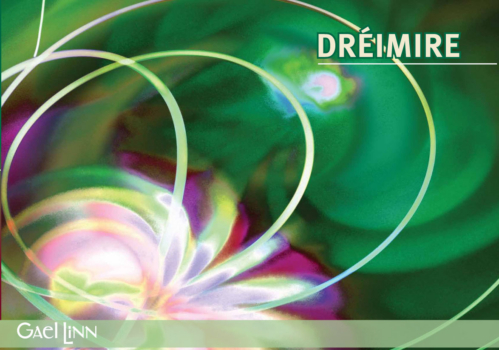
- As Trinity College decided not to publish ‘Authentik na Gaeilge’ anymore, Gael-Linn decided to launch a new publication to help Higher Level Leaving Certificate students of Irish, titled ‘Dréimire’. This was published in six parts over the academic year in association with ‘Anois’. ‘Dréimire’ was edited by Éamonn Ó Tuathail, with assistance from Áine Ó Cuirreáin. (see pic.) >> The oyster beds in Bá Chill Chiaráin near Ros Muc in Conamara, were sold to Údarás na Gaeltachta. >> Among the records released were 'Macalla 2', 'Seana Choirce' (Breandán Ó Beaglaoich), 'Ó na Sceirdí Aniar' (Seosamh Mac Donncha), 'Go mBeannaítear Duit' (Cór Chúil Aodha), 'Donal Lunny', 'Ó Riada Retrospective' and 'Mise Éire' (Elmer Bernstein).
- 1988
- One of the founders of Gael-Linn, Dónall Ó Móráin, who had held the full-time post of Ceannasaí since 1963, became Chairman of the Company and Brian Mac Aongusa became the new Chief Executive. (see pic.). >> Among the records released in 1988 were 'Na Saighneáin' (Kevin and Séamus Glackin), 'Portráid' (Seán Maguire), and 'Cruit' (Patrick Cassidy). >> Tomás Mac Síomóin resigned as editor of ‘Anois’ to return to his lecturing job and Micheál Mac Aonghusa was appointed in his place.
- 1989
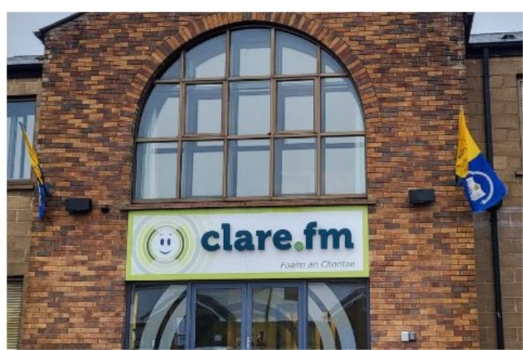
- The former cinema, The Strand, used as a venue for Bingo Gael-Linn was sold. >> In line with Gael-Linn's continuing interest in the Irish language in broadcasting a share holding was purchased in Clare FM and in Kerry Community Radio. These shares entitled Gael-Linn to a seat on the Board of each of these new stations. (see pic.) >> A new annual award, Gradam Gael-Linn, was instituted for the student who earns the highest marks in the Irish language A-Level examination in Northern Ireland. >> Records released included 'Plancstaí Bhaile na bPoc' (Muintir Uí Bheaglaoich), 'Solas Gorm' (T. Mac Dhonnagáin), 'Béal a' Mhúrlaigh' (PJ & Marcus Hernon), 'Siúil Uait' (Seán Ryan), 'Ceol Tigh Neachtain' and 'Vox de Nube' (Nóirín Ní Riain).
- 1990
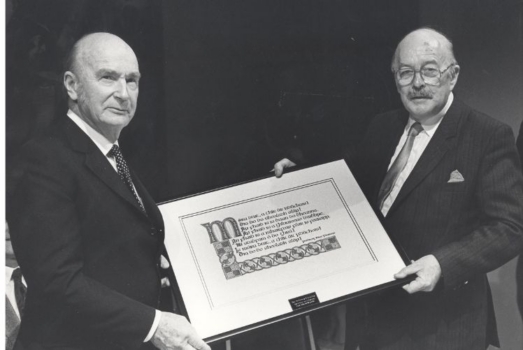
- This was the first year of Gael Linn’s Gaeltacht summer course for adults in Gaoth Dobhair, in the Donegal Gaeltacht. >> The 20th Slógadh Náisiúnta was held in Thurles, Co Tipperary. Having been a great supporter of Slógadh for years 1990 was the final year for President Patrick Hillery to preside over the Prizegiving ceremonies. To commemorate the occasion, Dónall Ó Móráin, Chairman of Gael-Linn made a special presentation to the President. (see pic.) >> Among the records released were 'Mick Mulcahy & Cairde' (Mick O' Connor, Joe Rynne, Mel Mercier), 'The Missing Reel/An Ríl ar Lár' (Séamus Maguire, John Lee) and 'Smaointe' (Deirbhile Ní Bhrolacháin).
- 1991
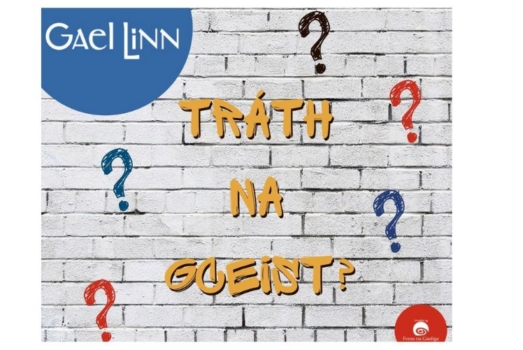
- Dublin was designated European City of Culture for the year. As part of the programme of events to celebrate this accolade Gael-Linn organised a major concert in the Olympia Theatre. Clannad, The Hothouse Flowers, Donal Lunny and friends as well as young participants in Slógadh took part in the concert. >> An Éigse, or weekend folk school, Féile Zozimus was also organised in the Liberties in Dublin reflecting on traditional Irish culture in Dublin during the 18th and 19th centuries. This festival was subsequently organised annually over a period of four years. >> A new scheme, Tráth na gCeist Gael-Linn, a series of Irish language table quiz events, was provided for post-primary students throughout Northern Ireland and the scheme has been very popular since. (see pic.) >> The film Mise Éire was issued in VHS video format.
- 1992
- Fios, an Irish language radio quiz for post-primary schools in Northern Ireland, organised by Gael-Linn, was broadcast by BBC Radio Ulster. >> The fishing rights in Teelin Bay and the local rivers and lakes were sold to Údarás na Gaeltachta. >> Gael-Linn took over an existing Gaeltacht summer college for teenagers, Coláiste Riocard Bairéid, in Eachléim, in the North Mayo Gaeltacht. (see pic.) >> Among the albums released on CD were 'Feadóga Stáin 2' (Mary Bergin), '1691' (Na Casadaigh), 'Mo Chairdín' (Paul Brock), 'The Belfast Harp Festival' (Gráinne Yeats), 'Blas na Meala' (Pádraig Mac Mathúna), 'Michael Coleman 1891- 1945'.
- 1993
- RTE Radio One broadcast an Irish language radio quiz series for adults, organised by Gael-Linn, under the title Ceist Agam Ort and it continued for a number of years after. (see pic.) >> BBC Radio Ulster broadcast a similar Irish language radio quiz for adults in Northern Ireland, organised by Gael-Linn, under the title Freagair. >> A series of Irish language table quiz events for senior primary school pupils in the Republic was established. These events were organised in subsequent years under the title of Spraoicheist. >> A large ex-cinema in Dublin, The Crumlin Superbowl, was purchased and refurbished as a bingo venue. >> Gael-Linn provided the studio equipment for a new Dublin Irish language radio station, Raidió na Life. >> The National Qualifications Authority of Ireland awarded a doctorate to Riobard Mac Góráin.
- 1994
- Staighre, a new publication to help Junior Certificate students of Irish was launched. This was published in six parts over the academic year in a similar format to Dréimire. (see pic.) >> A bilingual booklet, Irish Works: An Ghaeilge ar do Shonsa, explaining to young people the advantages of learning Irish, was published. >> In association with the Jesuit Film and Video Awards for young film-makers Gael-Linn instituted special awards for the best film in the Irish language and for the best use of traditional Irish music in a film score. >> CD's released included 'Cóisir' (Máire O' Keefe), 'A Stór 's a Stóirín' (P. Ní Uallacháin), 'Dúchas Ceoil' (Lennon Family), 'Ceol na Gealaí' (Dordán), 'Cliaraí Ceoil' (Seán Ryan) and 'Taobh na Gréine' (Seosaimhín Ní Bheaglaoich).
- 1995
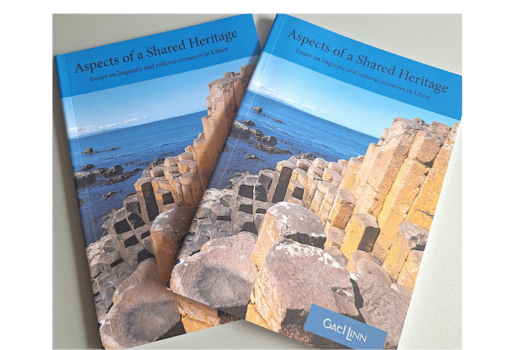
- Two adjoining premises in Cecilia Street, in the Temple Bar area of Dublin were purchased with the intention of developing an Irish language cultural centre. >> A special programme entitled An Enrichment Programme in Gaelic Studies, was offered as an optional module to senior students in certain schools in Northern Ireland, where Irish would not normally be offered. The programme consisted of eight lectures in English and these lectures were published in 1997 and updated again in 2015 under the title Aspects of a Shared Heritage. (see pic.) >> Inisfree Handknits Ltd., the company producing traditional hand knitted garments was sold. >> CD's released included 'Séideán Sí' (P. Glackin, R. Hannan), 'Ceol Inné Ceol Inniu' (Carl Hession), and 'Many's a Wild Night' (Jackie Daly).
- 1996
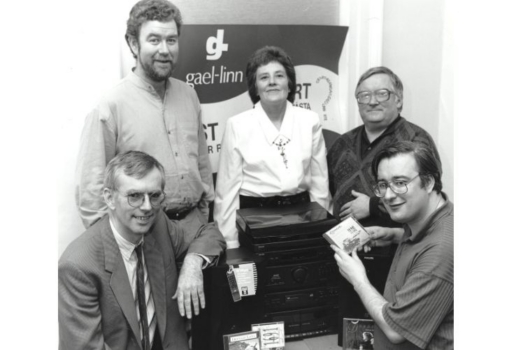
- Brian Mac Aongusa retired as Chief Executive and Herman Ó Briain was appointed to the position. >> (see pic.) >> A new publication, Céim, for students studying Irish for the Leaving Certificate ordinary level and for transition year students was launched. >> Following its failure to win a new contract from Bord na Gaeilge, the newspaper Anois ceased publication. The educational publications, Dréimire, Staighre and Céim, continued. >> At the request of the Department of Education and Science a special Irish language course for primary teachers trained outside the State was established. >> The following CD's were launched, 'An Dara Craiceann' (P. Ní Uallacháin), 'An Bodhrán' (Colm Murphy), and 'Aoife' (Aoife Ní Fhearraigh).
- 1997
- In the absence of State aid for the proposed Irish language centre in Temple Bar, the premises in Cecilia Street was sold as part of a joint venture with Óstlann Dubhlinne Teo., to establish an Irish language hotel and entertainment centre there. >> An Irish language public speaking competition for post primary students, Abair, was introduced in Northern Ireland to provide an alternative to team debates. (see pic.) >> The Cairde Gael-Linn fundraising operation was restructured and a tight network of self employed agents was established throughout the country. >> The Slógadh Náisiúnta was held in Carlow for the first time ever and a welcome visitor to the festival was Taoiseach John Bruton. >> The following CD’s were launched, ‘Trá’ (Carl Hession), and ‘Whistle Stop’ (Brian Hughes).
- 1998
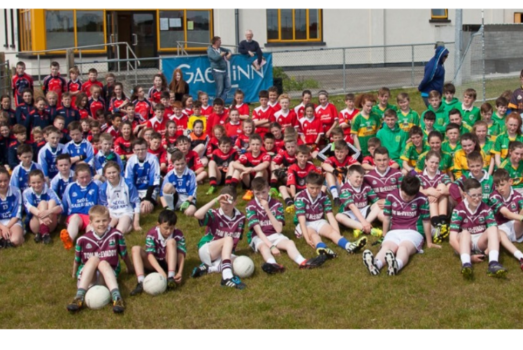
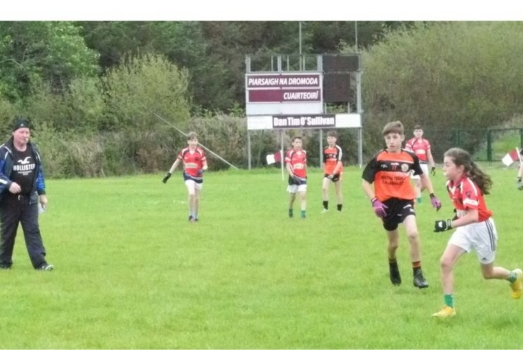
- Féile Peile Gael-Linn, a three-day football festival for pupils from Gaeltacht primary schools and Gaelscoileanna was trialed in Ráth Chairn, Co. Meath. The event encompassed a mini league, with social events at night. Over the following years the scheme developed with five separate two day festivals nationwide, one in each province but two in Munster. (see pic.). >> A basic media skills course, Tús na Cumarsaide, was offered to transition year students. The course content covered basic information about the print and broadcast media as well as the basics of making a radio programme. >> Gael-Linn, together with Údaras na Gaeltachta and Cumas Teo, co-sponsored a drama skills course for Gaeltacht youth clubs. >> AIB Banks sponsorship of the Gael-Linn schools debating competition came to an end but the competition continued as usual.
- 1999
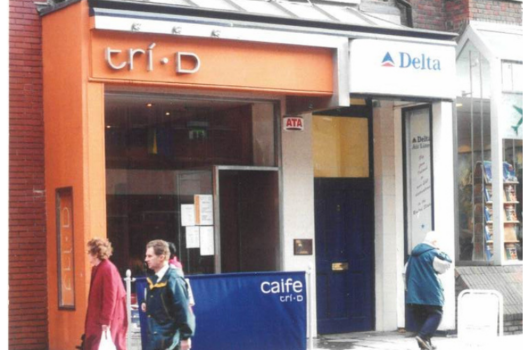
- A lease on No. 3 Dawson Street, Dublin was purchased with the intention of opening an Irish language centre with a coffee shop and classrooms. It was officially opened the following year under the name TríD (see pic.). >> The Independent Radio and Television Commission, in conjunction with Bord na Gaeilge/Foras na Gaeilge, established an Advisory Committee on Irish Language Programming. It consisted of representatives from the IRTC, Bord na Gaeilge/Foras na Gaeilge, Gael-Linn and five independent stations. >> Gael Linn ceased its direct bingo operation and leased the three halls to a professional bingo operator on a short-term lease. >> Irish language science days for pupils of Irish medium schools were organised in association with the Armagh Planetarium. An Irish language soundtrack was provided for one of the audiovisual shows in the Planetarium theatre
- 2000
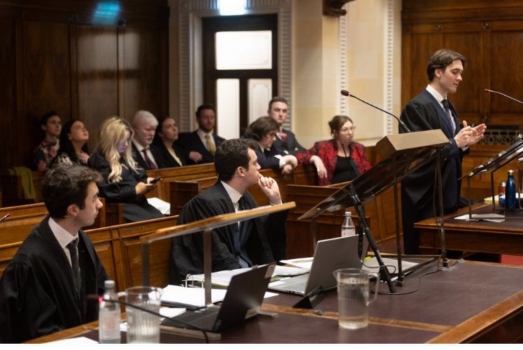
- A new education policy document was published. >> The Gael Linn headquarters at 26/27 Merrion Square, Dublin, were sold and a new headquarters building at 35 Dame Street was purchased. (see pic.) >> A joint venture with Granada Learning saw the launch of an interactive writing programme on CD-Rom entitled An Scríbhneoir Óg / Young Writer’s Workshop. >> Gael-Linn brought the Irish language translation of Martin McDonagh’s hit play, The Beauty Queen of Leenane, to the Samuel Beckett Theatre in Trinity College, Dublin, where it played to a packed house for five performances. >> Gael Linn was asked to take over the organisation of Bréagchúirt Uí Dhálaigh, a moot court for law students and it became one of the organisations annual events. >> Gael Linn withdrew from the Board of Management of Coláiste Chomáin in Ros Dumhach, Co. Mayo.
- 2001
- Former Ceannasaí and one of the founders of Gael-Linn, Dónall Ó Móráin, died on January 11, aged 77. >> A series of Irish language science days were organised at Oxford Island, Lough Neagh Discovery Centre. >> A new Gaeltacht policy was published. >>The organisation moved into its new headquarters in 35 Dame Street. (see pic.) >> Slógadh was discontinued and new schemes including Siansa, Seoid, Comórtas Clár Raidió, and Coirm, were launched. >> Early in the year many of Gael-Linn's activities had to be cancelled due to a breakout of foot-and-mouth disease. >> Gael-Linn won a European award for it's language promotion in Northern Ireland in a competition organised as part of ‘2001 European Year of Languages’. >> As part of a rebranding of the organisation a new logo was created and Gael-Linn lost it's hyphen!!
- 2002
- Antoine Ó Coileáin replaced Herman Ó Briain as Chief Executive. (see pic.) >> The group ‘Seansúil’, from the Seán Ó Treasaigh branch of CCÉ, Dublin, won the inaugural Siansa final held in Galway. >> All new schemes launched during that school year proved highly successful. >> Due to the growth of Irish-medium education, the 3 months Gaeltacht scholarship scheme, which had been established in 1955, came to an end. >> The book ‘Gaeilge agus Fáilte: A First Course in Irish Language and Culture for Adults’ by Annette Byrne, was published by Institiúid Teangeolaíochta Éireann in conjunction with Gael Linn. >> In honour of Dónall Ó Móráin, his family and Gael Linn came together to establish a bursary for students wishing to study folklore. >> Two CD's were launched 'Sorcha' (Sorcha Ní Ghuairim) and 'An Dealg Óir' (P. Ní Uallacháin).
- 2003
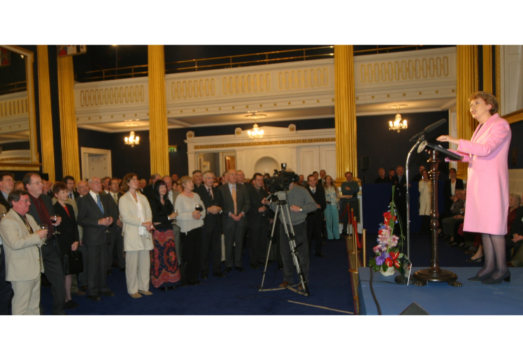
- Gael Linn celebrated it’s 50th anniversary in style, the main event taking place in Dublin Castle which was attended by the President of Ireland, Mary McAleese, together with numerous dignatories and friends of the organisation. There was great coverage of the celebrations throughout the year on all media outlets. >> In collaboration with the Independent Radio and Television Commission, a CD featuring short Irish-language phrases titled ‘Blúiriní Gaeilge Gael Linn’ was produced and distributed to all local radio stations across the country for daily broadcast. Broadcasters Mairéad Ní Ghormáin and Hector Ó hEochagáin featured on the CD, which proved very popular with a number of the stations.
- 2004
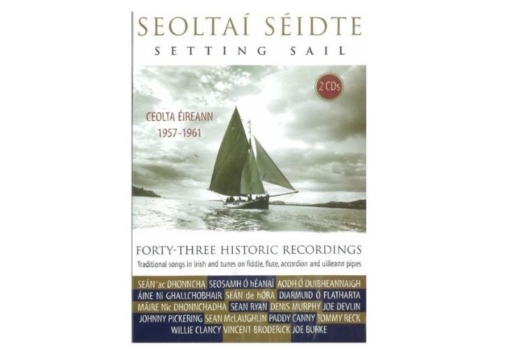
- A collection of the music and songs from the 78 rpm records released between 1957 and 1961 was issued on two CDs, accompanied by an information booklet, under the title ‘Seoltaí Séidte’. (see pic.). A CD by the group Téada called ‘Lá an Dreoilín’ was also released. >> Organised by Gael Linn and Comunn na Gàidhlig, and funded by Colmcille, the first three-day ‘Ri Chéile’ festival took place in Edinburgh. For a number of years the event brought together winners of Gael Linn’s debating and public speaking competitions and winners of Comunn na Gàidhlig debating competitions in Scotland. They debated with one another in both languages and took part in various other fun and cultural activities.
- 2005
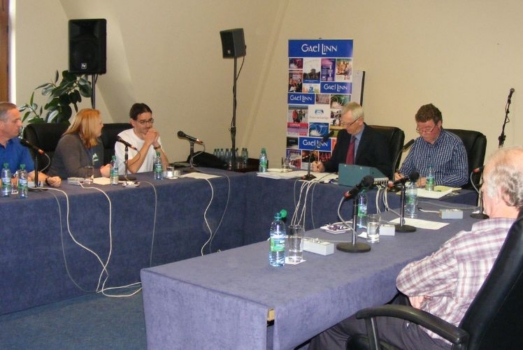
- Following discussions with RTÉ Radio 1, it was decided to broadcast an Irish-language quiz show in the autumn, a series organised by Gael Linn, with RTÉ handling production. Cathal Póirtéir served as both producer and presenter of the series called ‘Buille Faoi Thuairim’. Teams were assembled from 16 different clubs and societies across the country, and most of the rounds were recorded during the summer, with the exception of the two semi-finals and the final. These were recorded at an event during Oireachtas na Samhna, an arrangement that continued for a number of years. >> Two new CD’s were released on the Gael Linn label, ‘An Áit a bhfuil do chroí’ with Niamh de Búrca and ‘Áilleacht-Beauty’ with Pádraigín Ní Uallacháin.
- 2006
- The second level schools debating competition was divided into two separate competitions, Comórtas Uí Chadhain catering for All-Irish schools and Comórtas an Phiarsaigh for the remainder. >> There was good demand for Gael Linn’s new teaching resources, particularly ‘Buntús Ceoil’ and ‘Gaeilge Bheo’. >> The films ‘Mise Éire’ and ‘An Tine Bheo’ were made available on DVD. >> ‘Irish Music Magazine’ came on board as a publicity sponsor for Siansa. >> In March, the National Concert Hall organised a concert in partnership with Gael Linn as part of the ‘St. Patrick’s Festival Tradfest’ series, and in August, they organised another concert with Gael Linn to mark the seventy-fifth anniversary of Seán Ó Riada’s birth. >> Two new CD’s were launched ‘Geantraí TG4’ and ‘Inné Amárach’ featuring the group Téada.
- 2007
- Riobard Mac Góráin, a former Ceannasaí and one of the founders of Gael Linn died. The staff were dealt another bad blow towards the end of the year when one of their members Mártain Ó Siadhail also died after a short illness. >> Gael Linn accepted an invitation to set up a new summer college in Bun an Inbhir in the Donegal Gaeltacht. There were 122 students on the first course and the college is thriving ever since. (see pic.). >> Twelve programmes were recorded during the summer for the quiz series 'Buille Faoi Thuairim' and they were subsequently broadcast weekly on RTÉ Radio 1 starting on 4 August. >> Because of the demand for tickets for the Siansa final, held in the Arts Centre in Mullingar, it became obvious that a new and larger venue would be required for the following year.
- 2008
- To commerate 50 years of the first production of Brendan Behan’s play The Hostage in The Damer in 1958 Aisteoirí Bulfin were invited to stage the play in the same venue from 13 to 15 June. Gael Linn also published the book 'An Damer – Stair Amharclainne' by Mairéad Ní Chinnéide >> Gael Linn began organising monthly music events in Bewley’s, Grafton St. with the title Bewley’s@6! The events gave a platform to musicians and singers of all ages and was organised totally through Irish. (see pic.) >> A cultural weekend for adults was held in Ráth Chairn. >> Because of the huge demand for tickets the previous few years it was decided to move the Siansa final to the National Concert Hall, which became its new venue every year.
- 2009
- Following on from the success of the previous year another cultural weekend for adults was held in Ráth Chairn. It was attended by c. 25 people and was such a success that Gael Linn decided to make it an annual event. >> Because the National Concert Hall was unavailable for Craobh Siansa, the final was organised in the University of Limerick Concert Hall for that year only, and the event was a resounding success. >> A new album by Áine Uí Cheallaigh, 'Binneas Thar Meoin' was launched during the Oireachtas na Gaeilge festival in Letterkenny. >> Gael Linn made an agreement with Hibernia College to sponsor an annual prize for the student who gained the highest marks in their Irish exams. >> The quiz programme 'Buille Faoi Thuairim' on RTÉ Radio 1 continued to attract a large listenership.
- 2010
- The quiz series 'Buille Faoi Thuairim' came to an end after five years when RTÉ Raidió 1 decided not to continue with it. >> In the first half of 2010, five one-week filmmaking courses were organized in Eachléim, Co. Mayo with groups from Ballymote, Belmullet, Spiddal, and Carraroe. In addition, a filmmaking module was conducted during Gael Linn's two summer courses at Coláiste Riocaird Bairéid, Eachléim. (see pic.) >> Regarding the courses for adults organised annually, 11 courses were held in the Dame St. headquarters during 2010, and specialised courses were provided for Trinity College, Fiontar at Dublin City University, and the Road Safety Authority.
- 2011
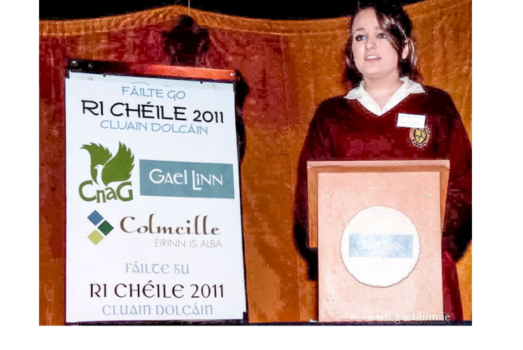
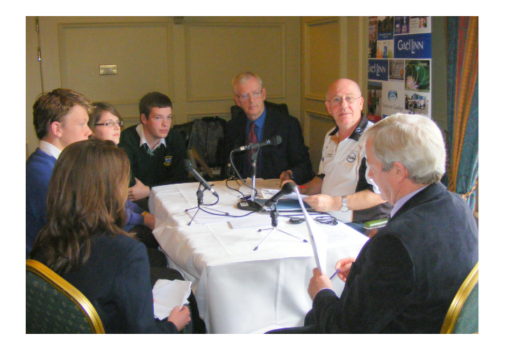
- The 'Ri Chéile 2011' festival which brought debaters from Ireland and Scotland together, was held in Clondalkin, Co. Dublin and the visitors from Scotland showed great interest in the efforts of the community there to promote the Irish language. The 'Ri Chéile' scheme was praised in the Scottish Parliament for its efforts in bringing Irish and Gadhlig speakers together. (see pic.) >> Third level students had started to attend the Oireachtas festival each year in huge numbers, and to provide them with a meaningful and educational event during their stay, Gael Linn reinstated it's third level debating competition in 2011. Preliminary bouts were held in October with the final taking place during the festival. The final was a huge success and is now a major event at the Oireachtas every year. A team from UCD were the winners in 2011.
- 2012
- One of the competitions organised by Gael Linn was a radio programme competition aimed at Transition Year students. In April, representatives from the three schools competing for the national prizes took part in the programme 'SBB Tráthnóna' with Seán Bán Breathnach on RTÉ Raidió na Gaeltachta. The three winning programmes were subsequently broadcast on the station. >> The Siansa final in the National Concert Hall received rave reviews and for the first time ever TG4 made enquiries about making a TV programme based on the final in 2013. >> The album 'Aislingí Ceoil' (Iarla Ó Lionáird, Tony McMahon, Noel Hill) was re-released and it was announced that most of Gael Linn's music catalogue was now available on the digital platforms like i-tunes etc.
- 2013
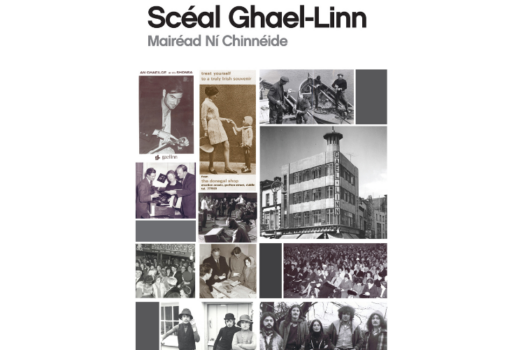
- As part of Gael Linn’s 60th anniversary celebrations Mairéad Ní Chinnéide was commissioned to write the history of the organisation. The book is titled Scéal Ghael Linn (fch pic.). A celebratory concert was held in the National Concert Hall in September featuring the group 'T with the Maggies' and the group 'Téada'. >> TG4 broadcast a programme based on the Siansa 2013 final in the National Concert Hall. >> A pilot scheme was initiated that would recognise English-medium primary schools for their efforts to promote spoken Irish, based on the tradition of awarding schools a flag at the end of the year as was being done by other groups such as the Green Flag. Negotiations got underway with Foras na Gaeilge in an effort to gain funding for this new scheme.
- 2014
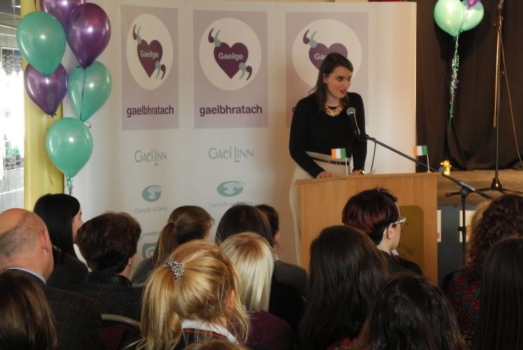
- Gaelbhratach was officially launched at primary level after a very successful pilot scheme, with one fulltime member of staff, funded by Foras na Gaeilge (see pic.). >> As a result of a process to coordinate and reorganise the work of the 19 Irish language organisations it funded, Foras na Gaeilge announced on 17 January the lead organisations that would take responsibility for six major areas of work. Gael Linn was named as the lead organisation with ‘Irish language Education for the English language sector and for adults, and the creation of Irish language activities for school pupils’ under its remit. Responsibility for 'An Fáinne' and the distribution of Mass leaflets was also assigned to Gael Linn, tasks that had previously been the responsibility of Comhdháil Náisiúnta na Gaeilge. >> The final 'Ri Chéile' festival was held in Glasgow after Comunn na Gàidhlig withdrew from the arrangement due to funding issues. The scheme began in 2004.
- 2015
- A second person was appointed to the Gaelbhratach team to oversee the scheme at post primary level. The first-ever flag under the scheme was awarded in March to Butlerbridge N.S., Co. Cavan, and in April, An Taoiseach, Enda Kenny presented flags to approximately 40 schools at a major event in Dublin. >> The first 'Scléip' finals took place after Foras na Gaeilge had entrusted the running of the scheme to Gael Linn. Changes were made to the competition format to place the emphasis on contemporary music and singing. (see photo) >> A celebratory event was held in Baile Bhúirne, Co. Cork to mark the 40th anniversary of Coláiste Bhaile Bhúirne. >> Gael Linn published the book 'Laoch na Laochra' which tells the story of Cúchulainn and was written by a member of staff Réamonn Ó Ciaráin >> Coláiste Riocaird Bairéid came to an end following an agreement with Coláiste Uisce to take on the houses which had previously been used by Gael Linn.
- 2016
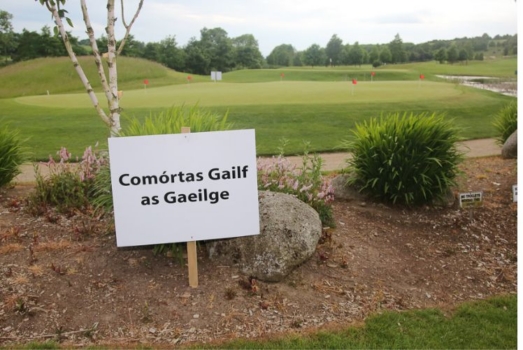
- As part of the 1916 commemorations, a performance of 'Mise Éire', featuring live music and commentary, was held at the National Concert Hall in January and in October, 'ONÓIR', a concert showcasing new work by Peadar Ó Riada, was staged there. >> For the first time ever, the same school, Scoil Chuimsitheach Chiaráin, An Cheathrú Rua, won both the junior and senior debating titles at the All-Ireland finals of Comórtas Uí Chadhain. >> Gael Linn was presented with GRADAM TG4, a special award commemorating 1916, in recognition of its efforts to promote the cultural vision of the heroes of 1916. >> New albums released included 'IMLÉ', 'Áille na hÁille' by Charlie Lennon, 'Tús Nua' by Gatehouse, and 'Tuille agus Trá' by Micheál Ó hAlmhain. >> In collaboration with Oireachtas na Gaeilge, the 'Galf as Gaeilge' event was held for the second consecutive year at the Dunmurry Springs golf course in Kildare. (see pic.)
- 2017
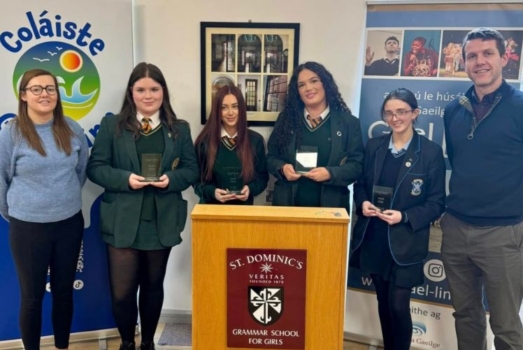
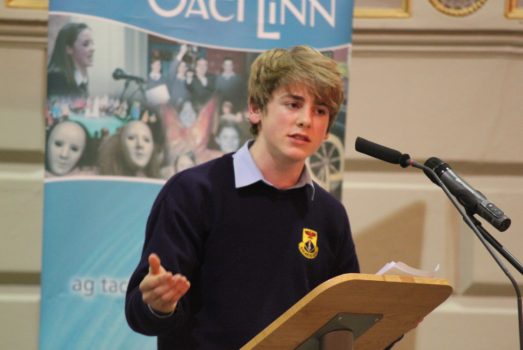
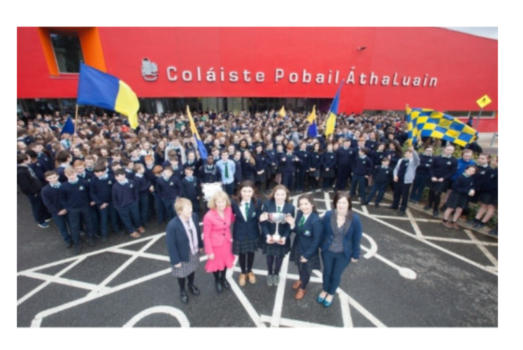
- The 2017 All-Ireland final of Comórtas Díospóireachta an Phiarsaigh was a historic occasion. The final was held in Athlone on 15 March, following approximately 40 preliminary rounds across the country. In the Senior Final, Athlone Community College won for their very first title, having participated in the competition for over twenty years and having lost a couple of finals along the way! They were absolutely overjoyed and the celebrations lasted for a week! . (see pic.) >> A workshop for primary school teachers from Northern Ireland was held in November in collaboration with St Mary’s University College, Belfast, Foras na Gaeilge, CCEA, and NICILT.
- 2018
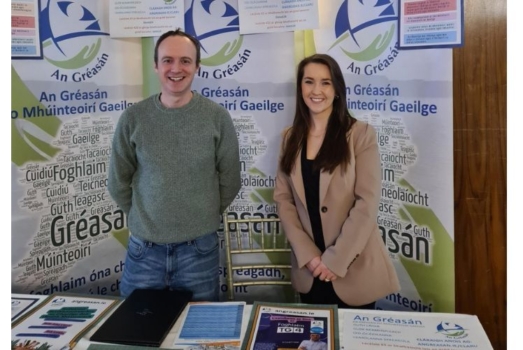
- Gael Linn established 'An Gréasán', a network for Irish-language teachers at post-primary level, to provide support regarding the teaching and learning of Irish. (see pic.) >> A series of talks titled 'Mo Scéal Féin – Caint agus Comhrá' were held in Gael Linn, Dame St., aimed at adult learners and the Irish-speaking community in the capital. >> It was not possible to proceed with the summer college in Baile Bhúirne due to a lack of beds, and despite efforts by locals, with the assistance of Gael Linn, to run a course of their own, they were unsuccessful. >> A celebratory concert was held at the Imperial Hotel in Cork in May, the place where Gael Linn was founded 65 years earlier. Seán Ó Sé was the star of the evening. >> Coiscéim published the book 'Riobard Mac Góráin, Ceannródaí Ildánach' by Máire Nic Fhinn, a former member of the Gael Linn staff.
- 2019
- Following positive reports from their inspectors, the Department of Education and Science agreed to provide funding for Gaelbhratach, enabling Gael Linn to appoint two additional staff members to join the existing team of two. >> For the first time ever, in support of those striving to promote the Irish language in this small Gaeltacht area, Gael Linn brought one of its Munster football tournaments to Uíbh Ráthach in south Kerry and it was a resounding success. (see pic.)
- 2020
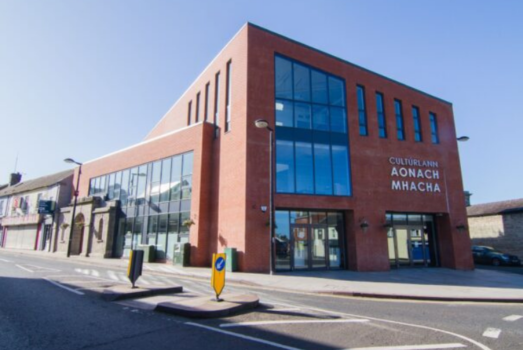
- 2020 The 'Aonach Mhacha' cultural centre opened in the city of Armagh. Gael Linn, in partnership with Cairde Teo., established Aonach Mhacha, and the organisation's Northern Ireland office has been located there ever since. (see pic.) >> Covid 19 arrived in March and most of the organisations activities were cancelled. The staff worked from home and were very innovative in creating events online like weekly concerts with well known musicians, singers and stotytellers under the title of ‘Teach le Chéile’, online quizzes for primary school children, and many more. Even Bréagchúirt Uí Dhálaigh and one or two other regular yearly events took place online and proved successful.
- 2021
- Because of Covid the trend of online activities continued into 2021 and some of them proved immensly popular. The organisation was very lucky to have members of staff who had particular skills in broadcasting, online media and technology in general. Among the new schemes established was a commentary competition, run in partnership with Croke Park, and also the television company Nemeton who provided muted footage of GAA matches previously broadcast on live TV so the young contestants could add their own commentaries. >> In collaboration with the Irish Heart Foundation, the Gaelbhratach staff translated the ‘Bizzy Breaks’ programme for primary schools under the title ‘Sosanna Spleodracha’.
- 2022
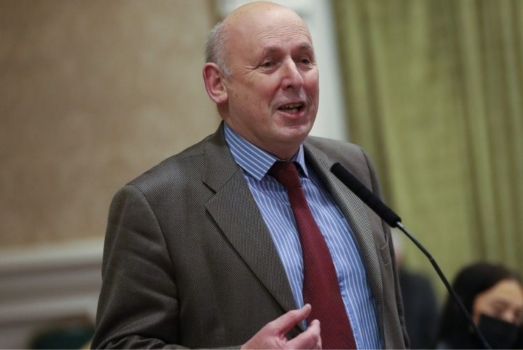
- Gael Linn Chief Executive Antoine Ó Coileáin retired after 20 years service and was replaced by Réamonn Ó Ciaráin, previously manager of Gael Linn's activities in Northern Ireland. (see pic.) >> Building on the experience gained during Covid, many of Gael Linn’s major competition finals were broadcast live on Facebook or YouTube even though the live audiences were back. More than 5,000 people tuned in to watch the Scléip finals and over 2,000 tuned in to the finals of Comórtas Uí Chadhain to see Scoil Chuimsitheach Chiaráin, An Cheathrú Rua repeat their feat of 2016, winning both the junior and senior finals. >> The book ‘Gael Linn i gCúige Uladh: Slis den Saol 1953-1970' by Dr. Pádraig Ó Baoighill was published.
- 2023
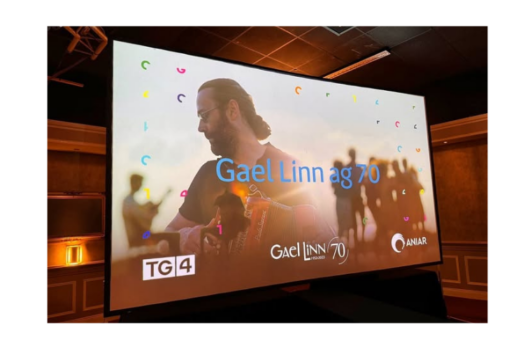
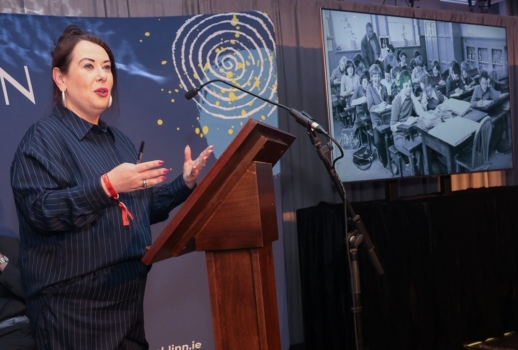
- As part of the celebrations marking Gael Linn's 70th anniversary, a concert was held in the Sugar Club in Dublin. The magazine 'Comhar' also published a special edition celebrating the organisation. The production company Aniar made a television programme about the organisation's history for TG4 which was mainly focused on the music, and RTÉ RnaG also broadcast a special programme. Pre-screenings of the television programme were shown at the IFI and at Oireachtas na Samhna, and it was broadcast at Christmas. (see pic.). >> The Department of Rural and Community Development and the Gaeltacht agreed to provide substantial funding to Gael Linn to develop the Gaelbhratach scheme at both levels. Ten additional staff members were hired and situated in various regions across the country.
- 2024
- A pilot scheme titled 'Scoil Spreagtha' was launched in Northern Ireland. The scheme mirrored 'Gaelbhratach' and aimed to support primary school teachers in Northern Ireland in providing Irish-language opportunities for their pupils. >> Former Chief Executive of Gael Linn, Herman Ó Briain died in December. >> Coláiste Mhachaire Rabhartaigh celebrated its 50th anniversary with a very enjoyable function in Gort a' Choirce. >> The Gael Linn Photo Archive was launched at Oireachtas na Samhna in Killarney, a collection of thousands of photographs taken at various occasions since the organisation was founded. The archive can be viewed on Gael Linn's website. (see pic.) >> The finals of ‘Scléip’ moved to the Helix Centre to cater for the huge surge in participants and audience numbers.
- 2025
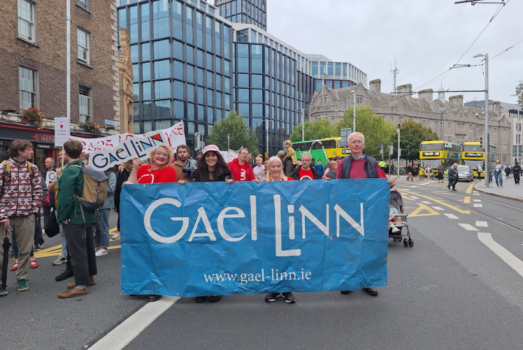
- In September Gael Linn took part in an organised march for Irish language rights through the streets of Dublin, together with the other major language organisations. (see pic.) >> The commentary competition for young people was rebranded as the 'Mícheál Ó Muircheartaigh Commentary Competition', in honour of our most famous commentator who championed the promotion of the Irish language and was a good friend to Gael Linn. >> Gael Linn played a central role in the 'Strategic Review of the Northern Curriculum' and in the recommendation that 'languages other than English' be taught.
- 2026
- The 'Scoil Spreagtha' scheme received a huge boost when securing permanent funding from the Department of Education in Northern Ireland, enabling Gael Linn to employ two further employees, who are also responsible for the management of 'An Gréasán', the support network for Irish-language teachers at post-primary level throughout the whole island. >> Two new albums were launched on the Gael Linn label, 'Tríú' with the group 'Gatehouse' and 'Orchestrating' with the group 'Téada'. >> Gael Linn announced that the organisation's permanent workforce had now reached 30, an increase of c.66% within the last few years. Most of the new staff are employed with the Scoil Spreagtha and Gaelbhratach schemes.



Ceol
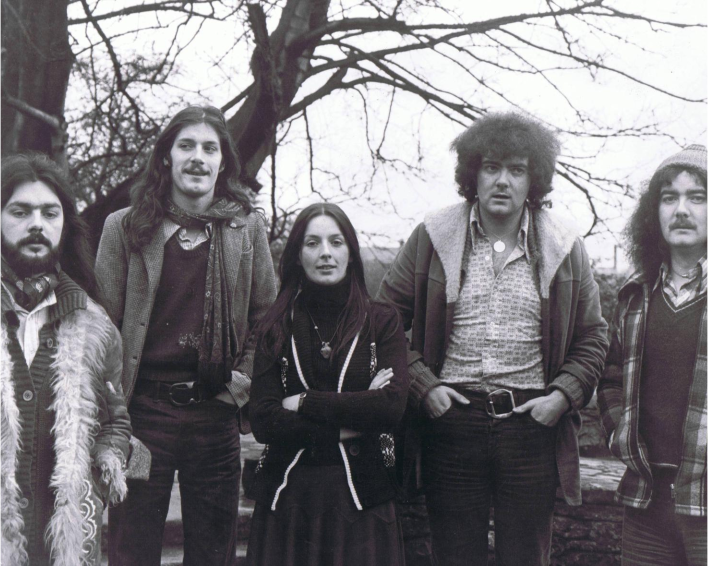
Tá breis agus 300 foilseachán ceoil i gcatalóg Gael Linn. I measc na gceoltóirí a thaifead le Gael Linn tá Seán Ó Riada, Skara Brae, Mary Bergin, Dolores Keane, Clannad, Micheál Ó Súilleabháin, Peadar Ó Riada, Aoife Ní Fhearraigh srl.
Tá céatadán ard den cheol seo ar fáil anois ar ardáin dhigiteacha ar fud na cruinne. Tá cuid dó le digitiú go fóill.
Imeachtaí
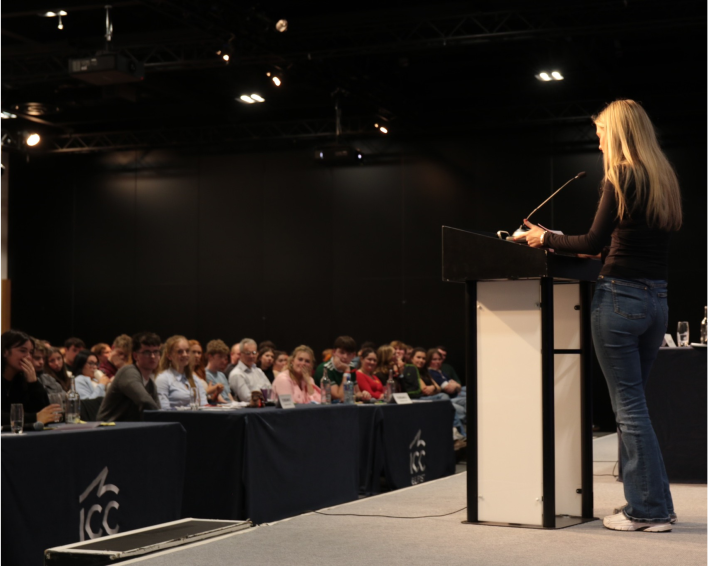
Ar cheann de na gnéithe is tábhachtaí den oidhreacht a bhaineann le Gael Linn is é an líon ard daoine a bhí páirteach in imeachtaí Gael Linn agus a chuaigh ar aghaidh le héachtaí a dhéanamh sa saol poiblí agus sa saol príobháideach. Is cinnte go raibh, go mbíonn agus go mbeidh rath ar obair Gael Linn.
Ábhar Teagaisc
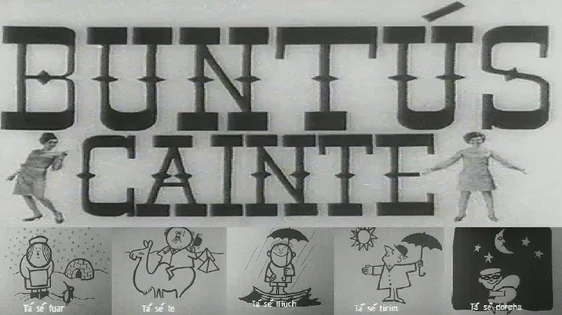
Gael Linn a rinne na taifid don chúrsa teagaisc Buntús Cainte agus cé gur foilsíodh mar chuid de chlár teilifíse ar RTÉ i lár na 60í den chéad seo caite tá rath ar na taifid seo go fóill agus iad ar fáil ar ardáin dhigiteacha ag Gael Linn.
Leanann obair Gael Linn ag tiomsú oidhreachta a thacaíonn le láidriú agus leathnú na Gaeilge. Tá sé seo déanta againn trí leabhair a fhoilsiú, ceol a thaifead, closleabhar a choimisiúnú, foilseacháin oideachasúla a fhorbairt agus ár láithreacht a mhéadú ar na meáin shóisialta.
Scannánaíocht
Tá traidisiún fada ag Gael Linn maidir le scannáin a fhorbairt. Tá 3 phríomhscannán úrnua, 34 gearrscannán agus os cionn 264 scéal nuachta ar fáil go sábháilte i gCartlann Institiúid Scannán Éireann (IFI). Bhí an-chlú ar Mise Éire, an chéad fadscannáin i nGaeilge a léirigh Gael Linn leis an stiúrthóir, George Morrison. I gcomhar le IFI beidh bailiúchán Amharc Éireann á chur ar fáil ar fud na cruinne i nGaeilge agus i mBéarla go luath. Tá an tábhacht ag ceannródaíocht Gael Linn sa scannánaíocht ó thaobh stair shóisialta na hÉireann ó 50í agus 60í an chéid seo caite ar aghaidh.
D’oibrigh Gael Linn le roinnt de mhórphearsana scannánaíochta na hÉireann ar nós George Morrison, Louis Marcus agus Colm Ó Laoighre.
Amharc Éireann